Thanksgiving
How to Host Thanksgiving for the First Time, Without the Panic
How to host Thanksgiving for the first time: a four-week plan for 2026, how many to invite, what to cook, borrow and hand out, and when to thaw the turkey.

If you've said yes to hosting and are now searching for how to host Thanksgiving for the first time, start with the calendar. Thanksgiving 2026 is Thursday, November 26. A four-week plan that starts on Thursday, October 29, leaves only a few small jobs for each week, and the last two days are for cooking.
The turkey gets most of the worry, but for a first-time host the harder parts are usually timing and space: more oven dishes than one oven can take, and a plan that only exists in your head. You can sort out both weeks before anyone rings the bell.
How to host Thanksgiving for the first time: four decisions to make first
Make these four decisions before you buy anything.
- The guest count. Count adults and kids separately, because it changes how much food you need, how many chairs you borrow and which table plan works.
- The serving time. Pick the hour the food goes on the table and tell everyone. The whole day is planned backward from it.
- The size of the menu. A turkey, four or five sides, rolls and one or two desserts is a full Thanksgiving table.
- Who brings what. Decide which dishes you'll make and which ones you'll hand out, before the invitations go.
The guest count is the one to settle first, and it's fine to keep it small. Count the seats you can really fit at your table, plus any second table you can set up nearby. If the list is longer than the seats, a buffet on the kitchen counter and plates on laps works, but decide that now so you know what to borrow. For a first year, a group of 8 to 10 is a lot of cooking already.
Write the four answers down where you'll see them every day. The first page of the Thanksgiving Hosting Planner is built for exactly that: date, serving time, guest count, budget and your three priorities for the day.
Check your kitchen before you write the menu
Start with the oven, because it limits the menu. USDA's roasting timetable, for an oven set to 325°F, gives a 14 to 18 pound unstuffed turkey 3 3/4 to 4 1/4 hours, and says the times are approximate and to always use a food thermometer. So for most of the day, the oven belongs to the turkey.
Before you choose a single side, count what you have:
- Oven racks, and whether a roasting pan and a casserole dish fit side by side.
- Burners on the stovetop, and how many big pots you own.
- Spare outlets for a slow cooker or an electric roaster.
- Fridge space for a turkey on a tray, the make-ahead dishes and the drinks. A cooler with ice on the back step can take the drinks.
Then write oven, stove, slow cooker or none next to every dish you're thinking about. If more than two sides need the oven in the last hour, swap one for something made on the stovetop, served cold or made the day before. Our post on classic Thanksgiving recipes covers which of the usual dishes can be made early.
Cook dishes you've made before. Your first Thanksgiving is a poor time to learn pie crust, because there's no room in the schedule to make it twice. Buying part of the meal is fine too: rolls from a good bakery or a pie from the shop down the road free up an hour and some oven space.
The shopping list in the American Farm Bureau Federation's 2025 Thanksgiving dinner survey (turkey, stuffing, sweet potatoes, rolls, peas, cranberries, a veggie tray and pumpkin pie with whipped cream) is a sensible shape for a first menu. Our guide to Thanksgiving dinner on a budget covers what that meal costs and where the savings are.
Share the cooking, and be specific about it
You don't have to cook everything to be the host. Guests often offer to bring something, and the offer is easier to accept if you say exactly what you need. "Anything you like" is hard to answer, while "a green salad for ten" is easy. Name the dish and how many people it should feed, and keep the oven dishes for yourself so nobody arrives with a casserole that needs the oven while the turkey is in it.
Match the job to the guest. Someone driving a long way can bring drinks, ice or rolls, which travel well and need no reheating. The friend who likes to bake can take dessert. A guest who doesn't cook can bring flowers, or arrive early to set the table, or stay late to wash up, and all of that is real help.
Ask about allergies and dietary needs in the same message as the invitation, then plan around the answers. A small card on the buffet that says what's in each dish saves a lot of questions at the table.
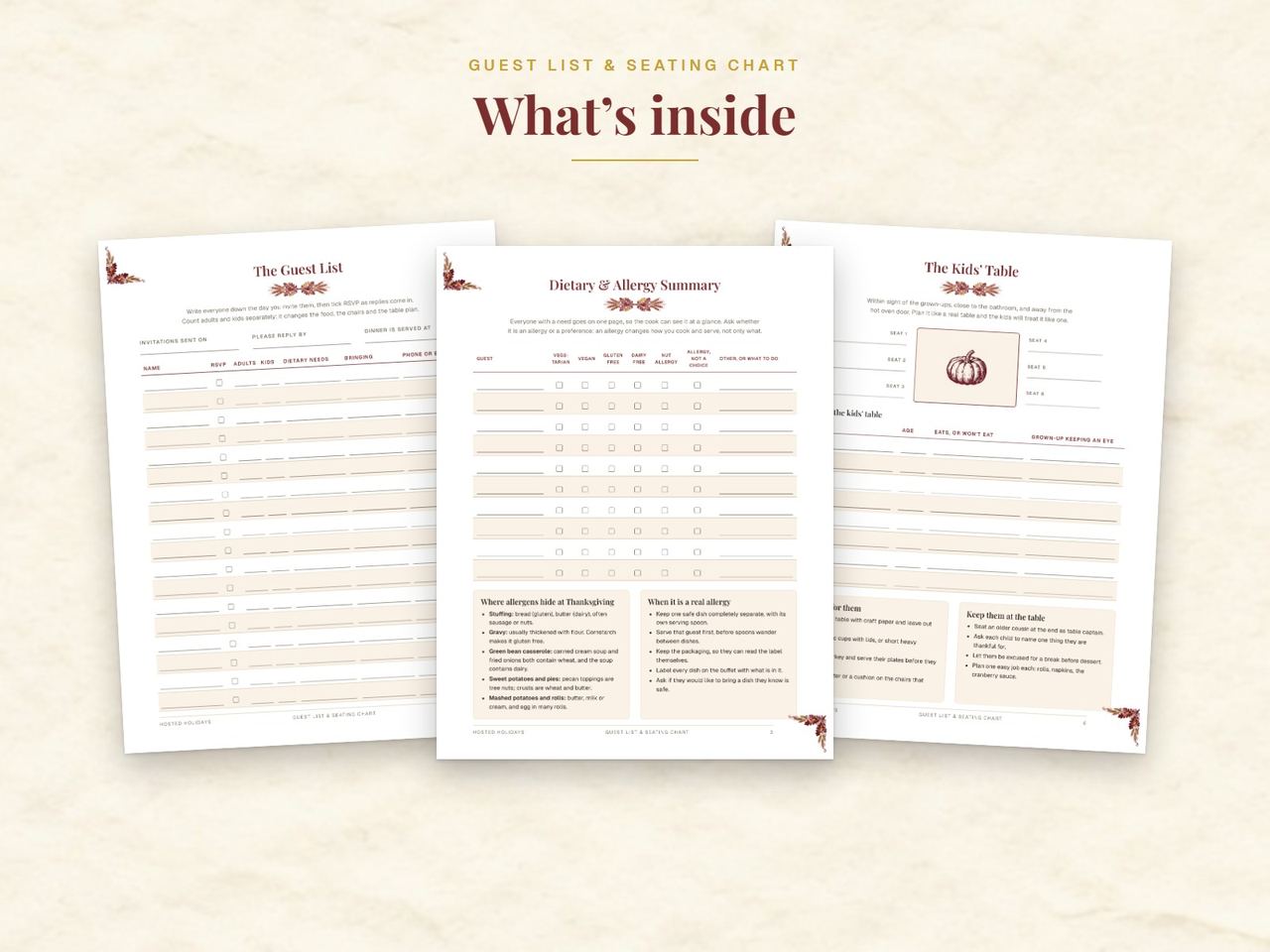
Keep the replies, the dishes and the allergies on one page so they don't get lost in a group chat. Our Guest List & Seating Chart has a column for what each guest is bringing and a page on where gluten, dairy and nuts hide in classic Thanksgiving dishes.
Buy, borrow or skip
Most of what a Thanksgiving dinner needs is used once a year, so borrow before you buy. Go through this list the weekend after you send the invitations:
- A food thermometer. Buy this one. USDA's guide says a whole turkey is safe when cooked to a minimum internal temperature of 165°F, measured with a food thermometer in the innermost part of the thigh and wing and the thickest part of the breast, and to check with a thermometer even when the turkey has a pop-up indicator.
- A roasting pan with a rack. USDA's guide places the turkey on a rack in a shallow roasting pan. Borrow one if you don't own one.
- A carving board, a sharp knife and a platter.
- One serving dish and spoon for every dish on the menu. Label each with a sticky note the night before so helpers know where everything goes.
- Chairs, plates and glasses for the guest count, kids included. Folding chairs can often be borrowed from a neighbor.
- Shallow containers for leftovers. USDA's Thanksgiving food safety advice is that leftovers must be refrigerated within two hours of serving, unless they have been kept hot at or above 140°F or cold below 40°F, and that turkey leftovers should be carved into smaller pieces and put in small, shallow containers so the meat cools evenly and quickly. The same release says to discard any foods that sat out for more than two hours at room temperature, and USDA's turkey roasting guide says to discard any turkey, stuffing and gravy left out at room temperature longer than 2 hours, or 1 hour in temperatures above 90°F.
Skip the gadgets you won't use again. You don't need a baster or matching serving bowls to host a good dinner.
The turkey: what size, and when to start thawing
USDA's turkey roasting guide allows 1 pound of turkey per person. If you want leftovers, our free turkey chart works on about 1 1/2 pounds a person, so 8 to 10 guests need a 12 to 15 pound bird.
For a fresh turkey, USDA says to buy it only 1 to 2 days before you plan to cook it.
A frozen turkey needs a start date on the calendar. USDA's guide allows approximately 24 hours for every 4 to 5 pounds in the refrigerator at 40°F or below, with the turkey in its original wrapper on a tray or in a pan to catch any juices that may leak, and gives a 12 to 16 pound bird 3 to 4 days. For Thanksgiving 2026, that bird goes into the fridge by Sunday, November 22. USDA also says a thawed turkey can remain in the refrigerator for 1 to 2 days, so a day early is fine. Our Thanksgiving day timeline has the thaw-by date for every size of bird, and the hour-by-hour plan for the day itself.
A four-week countdown for Thanksgiving 2026
Week of October 29
- Settle the guest list and send the invitations.
- Plan the menu and decide who brings what.
- Ask guests about allergies, and order a fresh turkey if you want one.
Week of November 5
- Borrow or buy whatever is missing from the list above.
- Buy pantry staples, drinks and paper goods.
- Test any recipe you haven't made before, on a weeknight.
Week of November 12
- Buy a frozen turkey and make room in the freezer.
- Chase the last replies and plan the seating.
Week of November 19
- Clear the fridge, then start thawing the turkey on the day USDA's chart gives for its weight.
- Buy fresh vegetables on Monday or Tuesday.
- Make the dishes that keep by Wednesday, and set the table on Wednesday night.
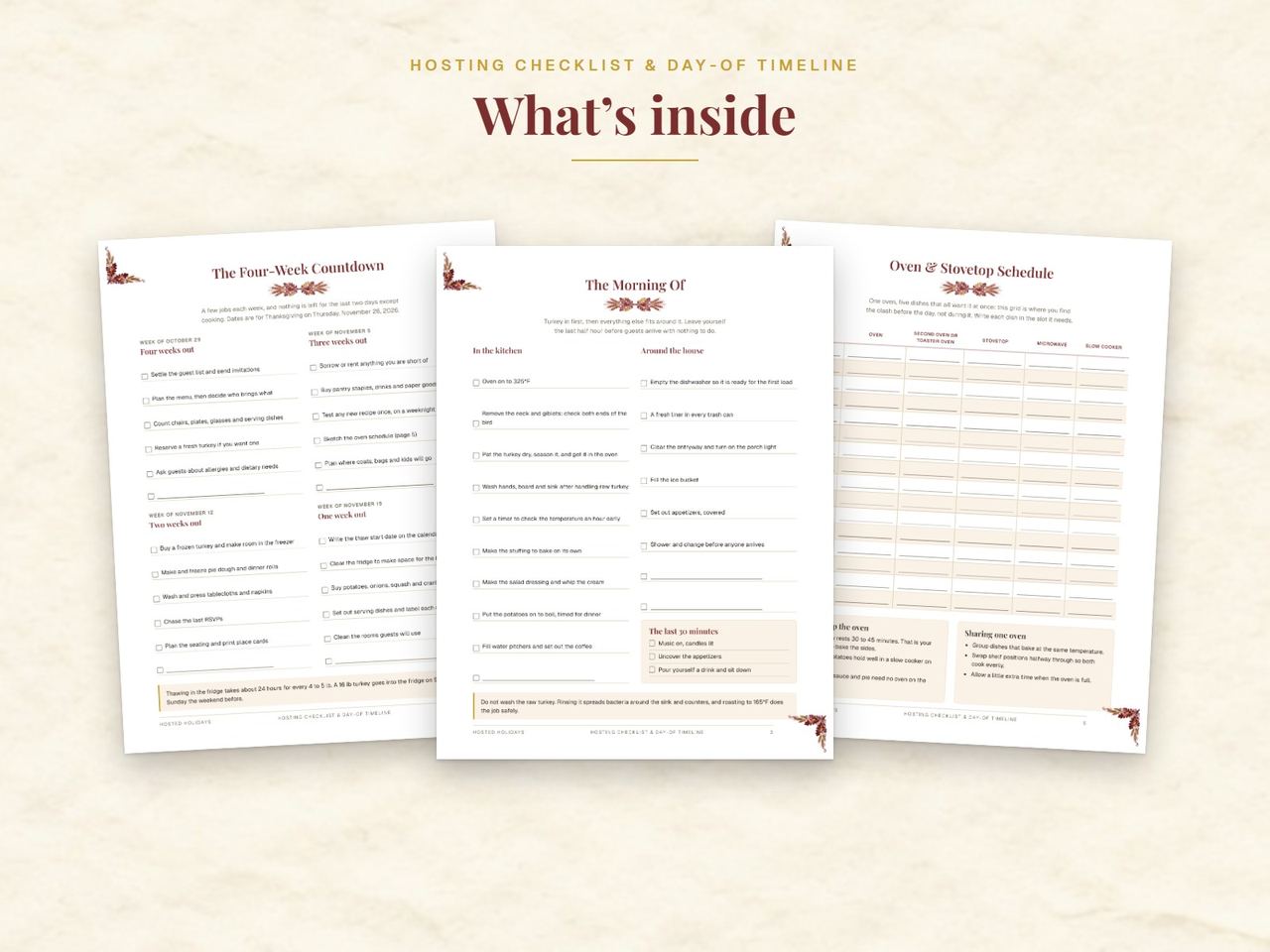
If you'd rather tick boxes than keep a list in your head, the Hosting Checklist & Day-Of Timeline has these weeks as fillable checklists dated from October 29, 2026, and the Thanksgiving Grocery & Shopping List splits the shopping into four trips with amounts for 8, 12 or 16 guests. Both are also in the Thanksgiving Collection with the rest of our Thanksgiving printables.
On the day, and what to expect from your first one
The day itself is planned backward from the serving time. The Thanksgiving day timeline does that hour by hour, from the morning oven check to carving.
Some things will run late, and that's normal for a first Thanksgiving. Put snacks and drinks out before the first guest arrives, so a turkey that needs more time costs you nothing but a second round of cheese and crackers. Say yes when people offer to help: hand one person the drinks, another the table, and someone else the dishes once you've eaten.
If a side dish doesn't work out, leave it off the table. There will still be plenty of food.
Keep a note on your phone through the day of what to change next year: the dish that took longer than you planned, the one nobody touched, the guest who should bring dessert again.
Frequently asked questions
How far in advance should you start planning Thanksgiving?
Four weeks is enough for a first-time host. Send the invitations and settle the menu four weeks out, buy pantry items and borrow equipment in week three, buy a frozen turkey two weeks out, and spend the last week thawing, shopping for fresh food and cooking ahead. For Thanksgiving 2026 that plan starts on Thursday, October 29.
How much turkey do I need per person?
USDA allows 1 pound of turkey per person, fresh or frozen, and 1 1/4 pounds for a frozen pre-stuffed bird. If you want leftovers, plan on about 1 1/2 pounds a person, which is what our free turkey chart uses. That works out to a 12 to 15 pound turkey for 8 to 10 guests.
What is the host responsible for at Thanksgiving?
Usually the turkey, the space and the plan. The host sets the serving time, makes or orders the main dish, and makes sure there are enough chairs, plates and serving dishes. Sides, desserts, rolls and drinks are fair to share out, as long as you ask early and tell each guest exactly what to bring and for how many people.
Is it rude to ask guests to bring a dish to Thanksgiving?
No. Many guests would rather bring something than arrive empty handed, and a specific request is easier for them than a vague one. Ask when you invite, name the dish and how many people it should feed, and keep the oven dishes for yourself so a guest's casserole doesn't need oven space you've already promised to the turkey.
What do you need to host Thanksgiving dinner?
A food thermometer, a roasting pan with a rack, a carving board and knife, a platter, one serving dish and spoon per dish, enough chairs, plates and glasses for everyone, and shallow containers for leftovers. Borrow what you only need once a year. The thermometer is the one to buy, because USDA says to use one even if the turkey has a pop-up indicator.
Printables from this post
Every one is a fillable PDF in US Letter and A4, with instant download.
-
Thanksgiving Hosting Planner
Plan the menu, the guests and the turkey without the last-minute panic
-
Hosting Checklist & Day-Of Timeline
Four weeks of small jobs, then a calm and well-timed Thanksgiving Day
-
Guest List & Seating Chart
Know who is coming, what they can eat, and exactly where they sit
-
Thanksgiving Collection
All ten Thanksgiving printables, from the first invitation to the last slice of pie


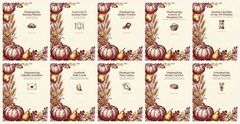 Get all ten Thanksgiving printables for $19One download, and you save $19 on buying them one by one.


